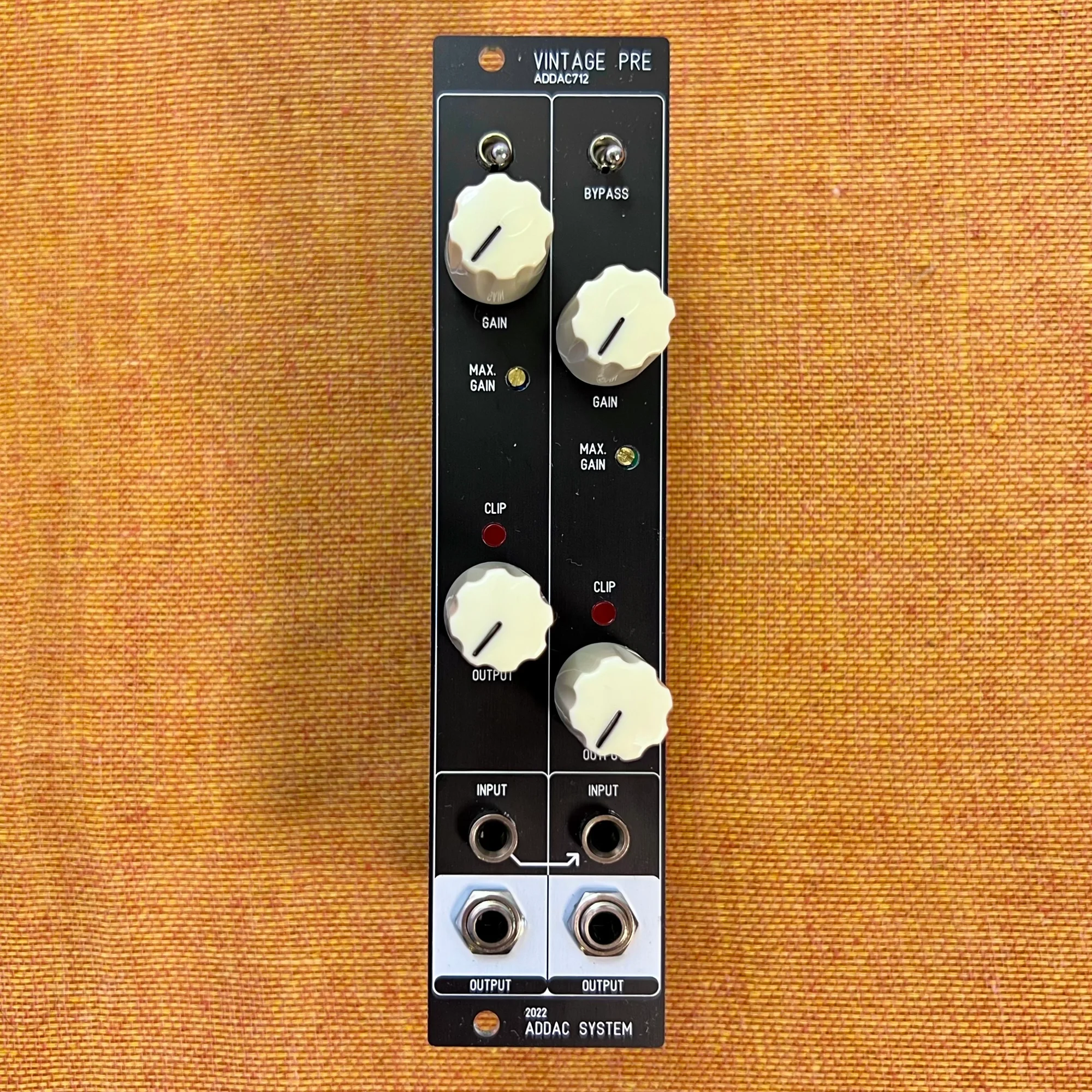
This is an introduction to the ADDAC712 Vintage Pre by ADDAC System, available at Takazudo Modular.
The ADDAC712 Vintage Pre is a dual-channel discrete gain stage amplifier based on a famous discrete preamp board used in legendary equipment from the 1970s. It produces distinctive saturation and distortion effects.
This product is available for purchase below.
- Manuals and Guides
- Features of the ADDAC712 Vintage Pre
- Interface Overview
- Use Cases for the ADDAC712 Vintage Pre
- Reference Videos
- Technical Specifications
- Included Accessories
- Product Warranty
Manuals and Guides
Takazudo Modular publishes manuals and guide articles for this product. Please see below.
Features of the ADDAC712 Vintage Pre
When ADDAC System designed this module, they focused on the original preamp board because of its attractive saturation/distortion character produced when the board clips audio.
This module not only adds distortion/fuzz character to modular signals, but can also be used as a preamp for external audio sources such as guitars and keyboards when paired with a module that accepts balanced inputs.
Interface Overview
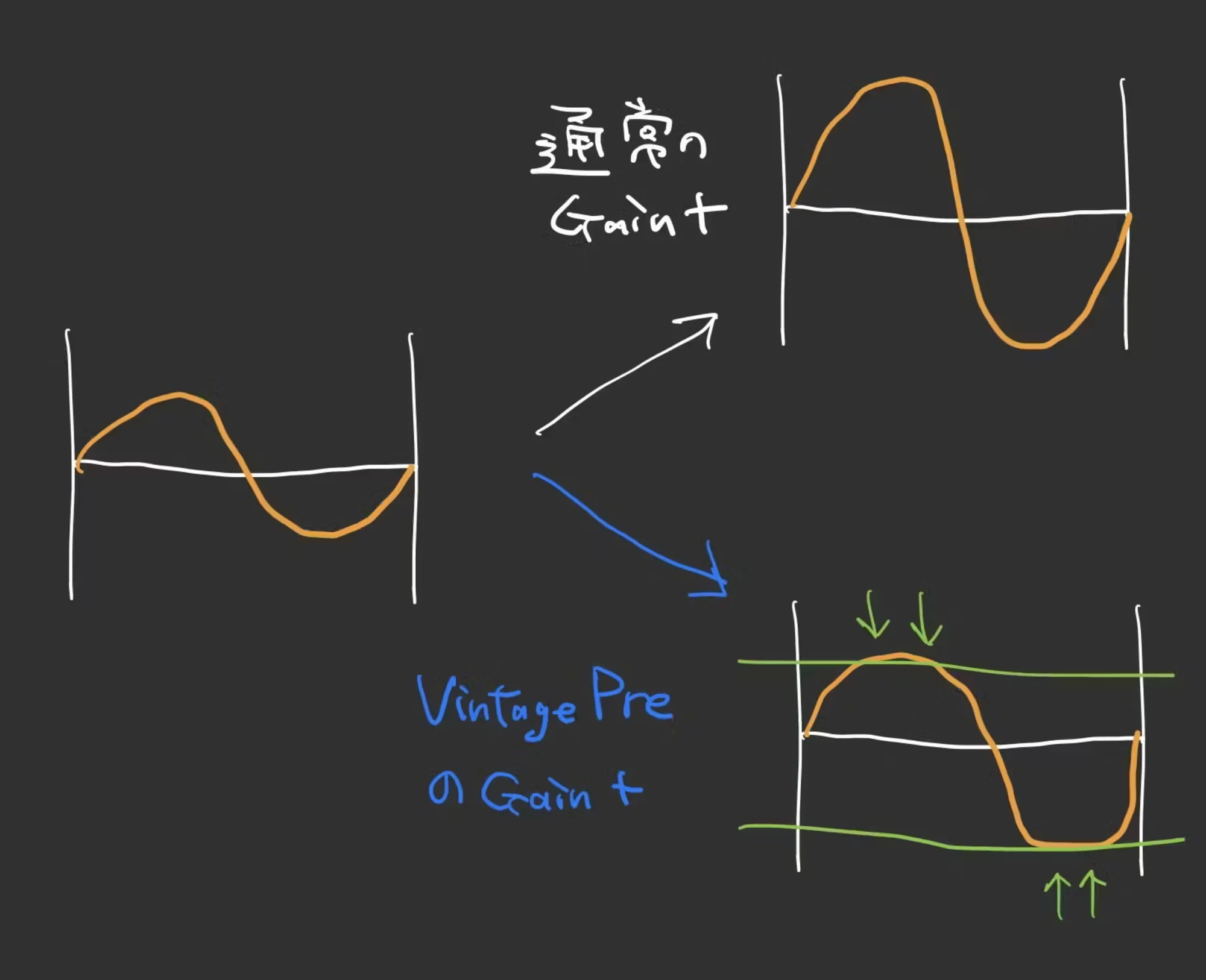
The knobs on this module's panel control the gain for the following two stages:
A: PREAMP stage GAIN (upper GAIN knob)
B: OUTPUT stage GAIN (lower OUTPUT knob)
The BYPASS switch at the top of the panel toggles whether the input signal passes through the PREAMP stage (A) (switch up) or bypasses it (switch down).
The PREAMP stage GAIN amplification range is set by the GAIN knob (A), and the maximum amplification level can be configured by the user using the MAX GAIN trimmer.
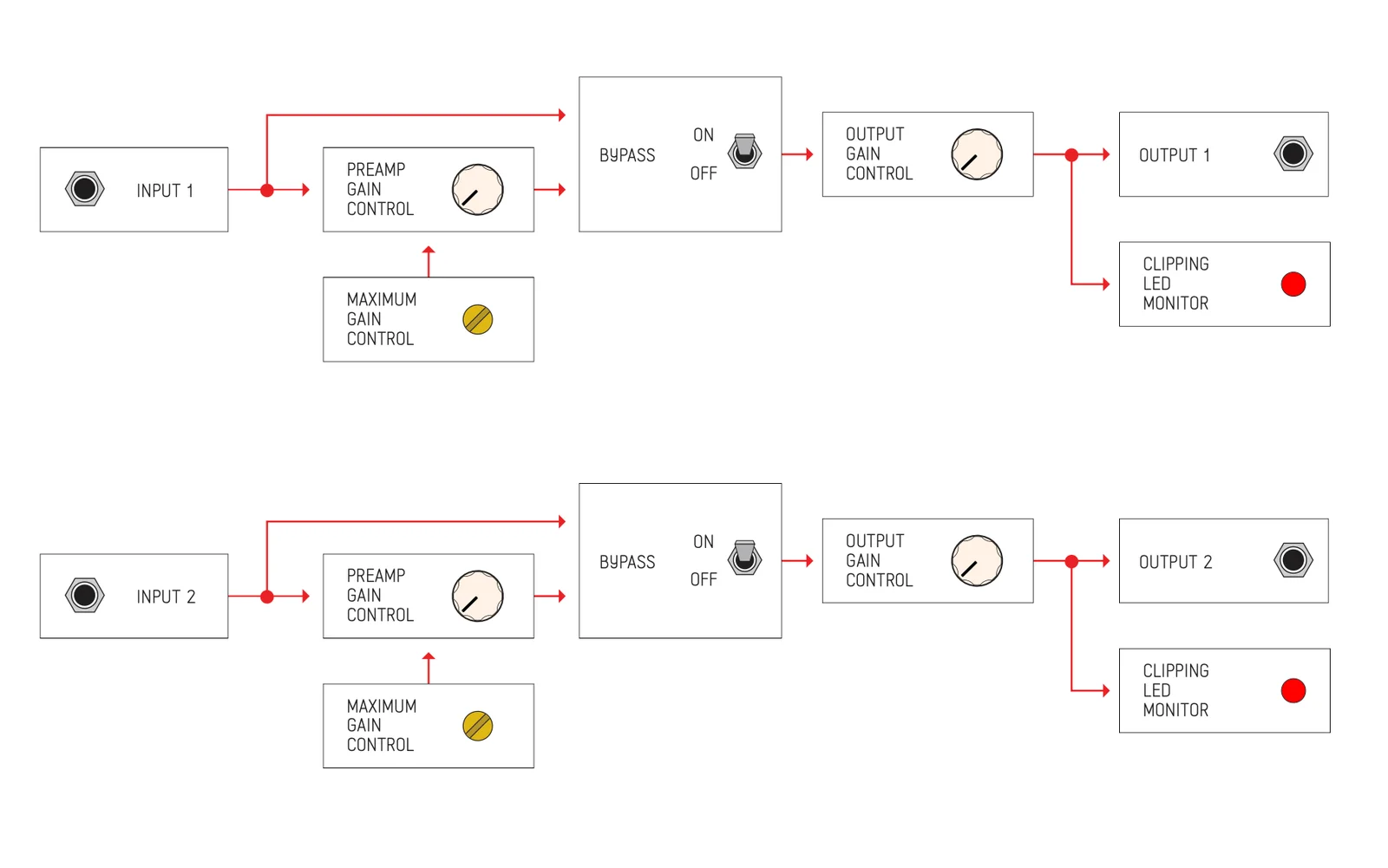
Input signals up to +/-5.5V maintain their integrity, but beyond that point, saturation begins to increase. Hard clipping starts at approximately +/-6V. This clipping has a distinctive quality that creates the module's unique tone. At extreme levels, the audio's 0V bias reference shifts upward, producing a gate-like signal shape at the output.
The OUTPUT knob (B) at the bottom of the panel controls the final volume level. The CLIP LED next to it provides visual indication of output clipping at the final OUT.
In practice, you turn the upper GAIN knob to control the amount of clipping, and adjust the final volume with the lower OUTPUT knob.
Use Cases for the ADDAC712 Vintage Pre
The primary appeal of the ADDAC712 Vintage Pre is undoubtedly the quality of its distortion. Personally, I enjoy hard-hitting techno music with heavily compressed drums, bass, and other sounds, so this module is one I could never have too many of.
While saturation and distortion may sound like a single category, the actual sonic processing varies enormously depending on the circuit design or, in the digital domain, the algorithm used.
The distortion effect produced by the ADDAC712 Vintage Pre doesn't abruptly clip and cut the signal. Instead, I found that the hard-clipped portions are gently rounded. To hear exactly what this sounds like, I encourage you to check out the demo videos below.
Reference Videos
In the video below, you can hear the sonic characteristics produced by the ADDAC712 Vintage Pre.
Below is a demo I recorded, running a 909-style kick drum and mono synth module -- Patching Panda: BD-Z -- through this ADDAC712 Vintage Pre and the companion ADDAC714 Vintage Clip. Use it as a reference for how the sound changes.
Technical Specifications
Width: 6HP
Depth: 40mm
Power consumption: 40mA +12V / 40mA -12V
Included Accessories
Power ribbon cable
Screws
Product Warranty
This product carries a 2-year manufacturer warranty covering normal use under typical operating conditions. Please contact us if you notice any issues with the product.
About ADDAC System
ADDAC System is a modular synthesizer maker based in Portugal.
Their lineup is built on solid, no-nonsense modules that make the most of analog character. At the same time, they have released plenty of inventive modules that bring digital technology into the mix in a tasteful way — flexible CV-to-MIDI converters, deeply controllable granular processors, and more.

Bonus: Modular Accessory Set by 電氣美術研究會 (Denki Bijutsu Kenkyukai) Included
In the hope that more people will get hands-on with modular synths, we have teamed up with 電氣美術研究會 to bundle a modular accessory set with this product.
The contents vary by season — patch cables, power cables, a dress-nut sample set, a mono splitter, and more. The set is included with the product, so please give it a try!
That concludes the introduction to the ADDAC712 Vintage Pre.
If you're playing drum sounds, hi-hats, snares, or other rhythmic sources and feeling like something's missing in terms of punch, this module might be exactly what you've been looking for without realizing it. Personally, I consider this module a strong contender for cases where you simply want to make your sound fatter. Even before getting into modular synths, I was always using preamp plugins in my DAW.
If you don't yet own any saturation/distortion module, having one like this can significantly expand your sound design possibilities. You might also want to consider the ADDAC714 Vintage Clip, which performs similar processing but with a distinctly different sonic character.
We hope you found this helpful.